Generative AI in Procurement: The Digital Transformation Your Business Can't Ignore

"Generative AI isn't just another tool: it's a structural shift in how we handle business data."
Table of Contents
- Introduction: The Automation Shift
- The Procurement Problem Nobody Talks About
- What Is Generative AI in Procurement?
- Intelligent BOQ Reading and Item Extraction
- AI-Powered PR and RFQ Identification
- Processing Brands, Specifications, and Quantities
- Intelligent Supplier Identification and Matching
- Automated RFQ Email Generation
- Quotation Data Capture and Management
- Supplier Evaluation and Lead Time Analysis
- The Reimagined Procurement Cycle
- Why Digital Transformation Starts Here
1. Introduction: The Automation Shift
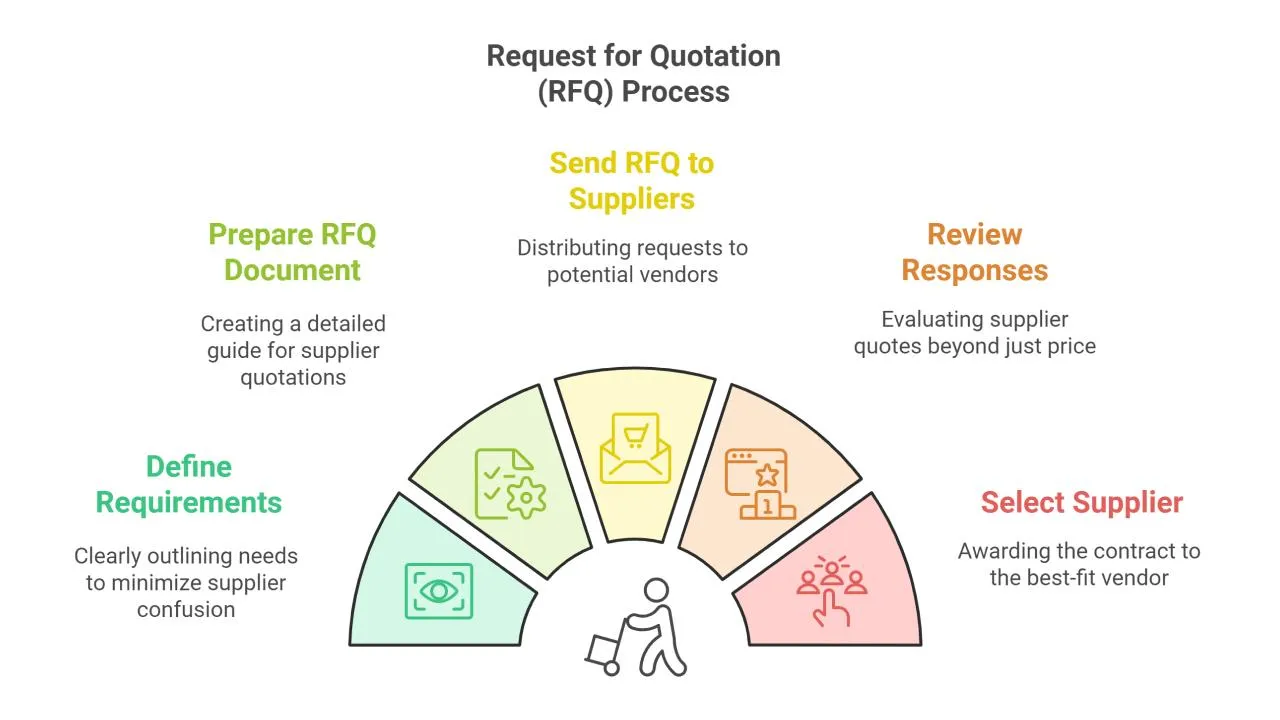
What if your entire procurement cycle: from reading a BOQ to sending RFQ emails and comparing supplier quotations: could run almost automatically?
That’s no longer a futuristic idea. It’s already happening. Organizations still relying on spreadsheets, manual emails, and repetitive procurement workflows are rapidly falling behind. Generative AI is transforming procurement from a slow, administrative function into a fast, intelligent, and data-driven operation.
The question is no longer whether AI will change procurement. The real question is: Will your organization lead the transformation or struggle to catch up?
2. The Procurement Problem Nobody Talks About
Procurement sits at the center of every business operation, yet many companies still manage it using outdated and highly manual processes.
A typical manual procurement cycle often looks like this:
- BOQ Receipt: A project manager sends a dense Bill of Quantities.
- Manual Extraction: Procurement teams manually pull out hundreds of line items.
- Supplier Search: Vendors are identified through old records or endless manual searches.
- Manual Outreach: RFQ emails are written and sent one by one.
- Comparison Chaos: Quotations arrive in varying formats, requiring manual Excel entry.
Errors happen. Deadlines slip. This isn’t simply a workflow problem: it’s a data problem.
3. What Is Generative AI in Procurement?
Generative AI uses advanced language models capable of reading, understanding, and generating information from unstructured data. Unlike traditional automation, AI doesn't just follow rules: it understands context.
Whether it is a PDF, an email, or a scanned BOQ, procurement systems can now process documents, identify suppliers, and support decision-making with minimal human intervention.
4. Intelligent BOQ Reading and Item Extraction
“Your BOQ has 400 line items. AI reads them in seconds.”
Bill of Quantities documents often arrive in inconsistent formats like scanned images or complex Excel sheets. Traditionally, procurement teams spend hours extracting item descriptions and specifications. AI-powered extraction can now:
- Read multi-format BOQs (PDF, Excel, Scans).
- Use OCR to digitize handwritten or scanned documents.
- Categorize items and detect missing info instantly.
5. AI-Powered PR and RFQ Identification
Procurement inboxes are notoriously chaotic. Generative AI can classify these communications in real time, extracting structured information from email content and attachments. This significantly reduces administrative workload while improving response speed and overall visibility across the department.
6. Processing Brands, Specifications, and Quantities
Procurement documents frequently contain multiple approved brands and complex technical variations. AI can:
- Identify and normalize brand names.
- Extract technical specifications automatically.
- Consolidate quantities across multiple documents.
- Match equivalent products across suppliers.
7. Intelligent Supplier Identification and Matching
Finding the right supplier traditionally depends on internal contacts and manual database searches. AI-powered discovery changes this by matching suppliers based on specific categories and ranking vendors using historical performance. Instead of relying on institutional memory, teams gain instant access to recommendations that improve supply chain resilience.
8. Automated RFQ Email Generation
Writing RFQ emails manually is repetitive and time-consuming. Generative AI automates this outreach by generating professional, personalized emails that include only relevant line items per supplier. By attaching specifications and setting response deadlines at scale, businesses improve supplier response quality while reducing delays.
9. Quotation Data Capture and Management
Supplier quotations arrive in different structures and currencies. AI systems can automatically extract this data, normalize pricing formats, and store responses centrally. This creates a fully searchable and auditable procurement record that flags incomplete quotations the moment they arrive.
10. Supplier Evaluation and Lead Time Analysis
Modern procurement decisions depend on much more than price. AI-powered evaluation systems analyze lead times, supplier reliability, and brand compliance alongside pricing.
AI can automatically:
- Build complex comparison matrices.
- Score suppliers using custom criteria.
- Identify pricing anomalies and delivery risks.
11. The Reimagined Procurement Cycle
With Generative AI, the procurement process becomes dramatically faster. What once required weeks of manual effort can now happen within hours through a streamlined digital workflow:
| Stage | Manual Process | AI-Powered Workflow |
|---|---|---|
| Data Entry | Hours of manual typing | Seconds of automated extraction |
| Supplier Match | Based on memory | Based on intelligent data ranking |
| Outreach | One email at a time | Personalized bulk generation |
| Analysis | Manual Excel sheets | Automated comparison matrices |
12. Why Digital Transformation Starts Here
Organizations adopting Generative AI aren’t just reducing operational costs: they’re creating a competitive advantage. AI-driven procurement allows businesses to respond to opportunities faster, reduce errors, and improve supplier negotiations.
The manual era of procurement is ending. The intelligent era has already begun.
Will your organization lead the transformation: or spend the next five years trying to catch up?