The Future of Human Resources: How AI Is Going to Change HR Careers in the Next 5-10 Years

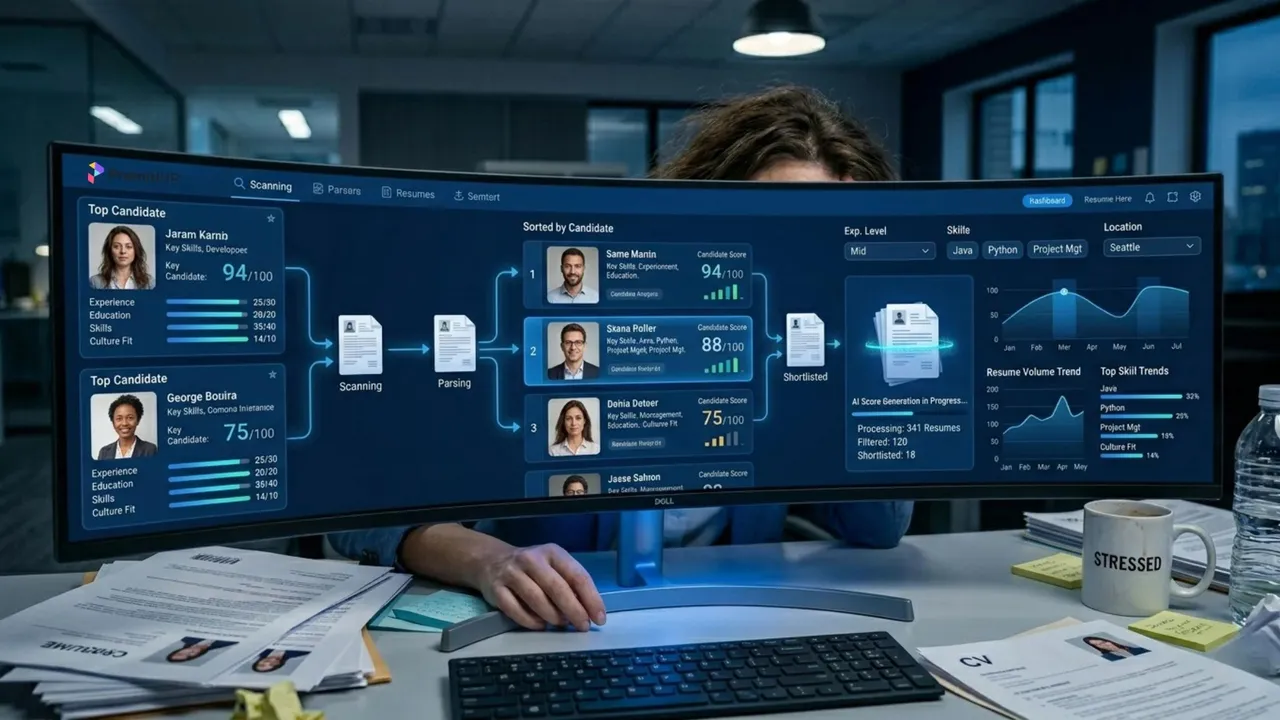
"AI is not coming for HR careers. But it is absolutely coming for the way HR careers are practiced. The professionals who understand what is changing, what is not, and how to position themselves on the right side of that line will not just survive the next decade. They will define it."
Table of Contents
- Introduction: The Career Question Keeping HR Up at Night
- Step 1: Where AI Is Already Inside HR
- Step 2: What AI Will Automate in HR Over the Next 5 Years
- Step 3: The 5 New HR Roles That AI Is Creating
- Step 4: Real Case Study: How Unilever Rebuilt Its HR Function Around AI
- Step 5: What Every HR Professional Must Do in the Next 12 Months
- Step 6: The Numbers That Define the Next Decade of HR
- How Gezora.ai Is Helping Organizations Navigate AI Integration in HR
- The Bottom Line: The Beginning of HR's Most Important Era
Introduction: The Career Question Keeping HR Up at Night
Here is a question that is keeping HR professionals awake right now: if AI can screen 10,000 resumes in the time it takes you to read 10, write a job description in 90 seconds, and predict which employees are at risk of leaving before they even know it themselves, what exactly is the HR department for?
It is the most important professional question in Human Resources since the function was invented. And the answer is more nuanced, more urgent, and more full of opportunity than most people realize.
AI is not coming for HR careers. But it is absolutely coming for the way HR careers are practiced. The professionals who understand what is changing, what is not, and how to position themselves on the right side of that line will not just survive the next decade. They will define it.
This is that guide. Step by step, with real data and a real case study.
Step 1: Where AI Is Already Inside HR
Before we talk about the next decade, it is important to understand that AI is not approaching HR from the outside. It is already operating within it. Right now, in 2026, AI systems are actively performing tasks that HR professionals were doing just three years ago.
| HR Function | What AI Is Doing Right Now |
|---|---|
| Resume Screening | Parsing, ranking, and shortlisting thousands of applications based on role fit, skills match, and historical hiring success data |
| Job Description Writing | Generating inclusive, bias-reduced, SEO-optimized job postings in under two minutes |
| Interview Scheduling | Coordinating availability across multiple stakeholders and time zones autonomously |
| Onboarding | Delivering personalized onboarding pathways and answering new hire questions 24/7 via AI chat |
| Employee Sentiment | Analyzing engagement survey responses and communications data for early attrition signals |
| Performance Analysis | Identifying high performers, flagging disengagement patterns, and recommending development paths |
| Payroll and Compliance | Automating calculations, flagging regulatory risks, and generating compliance documentation |
THE HONEST REALITY A 2025 SHRM study found that 79% of enterprise HR teams are already using at least one AI tool for talent acquisition. A separate LinkedIn Talent Solutions report found AI-assisted hiring decisions have increased by 340% since 2022. This is not a trend. This is an industry-wide structural shift already underway.
Step 2: What AI Will Automate in HR Over the Next 5 Years
The most important career question for any HR professional right now is not "will AI take my job?" The right question is: which parts of my job will AI do better than me, and what does that free me to focus on?
Here is a clear-eyed look at what will be automated, what will be augmented, and what will remain distinctly human over the next five years.
| Automated | Augmented | Human |
|---|---|---|
| Resume screening and ranking | Performance reviews (AI data, human judgment) | Employee relations and conflict |
| Interview scheduling | Talent pipeline planning | Culture building and trust |
| Benefits administration | Learning and development design | Ethical AI oversight |
| Compliance reporting | Compensation benchmarking | Executive coaching |
| Onboarding document preparation | Workforce forecasting | Mental health support |
| Basic policy Q&A chatbots | DEI strategy and measurement | Values-driven leadership |
| Payroll processing |
Step 3: The 5 New HR Roles That AI Is Creating
Here is the part of the conversation that most AI and HR articles miss entirely. AI is not just eliminating tasks from existing HR roles. It is creating entirely new roles that did not exist five years ago and will be in high demand by 2030.
01. HR AI Systems Manager Every AI tool in an HR stack, from applicant tracking to sentiment analysis, needs a human who understands both HR strategy and AI system behavior. This role owns the configuration, bias auditing, and performance monitoring of HR AI platforms. Currently in critically short supply.
02. People Analytics Strategist Advanced workforce data analysis is moving beyond dashboards into predictive modeling. Companies need HR professionals who can translate AI-generated workforce insights into board-level strategic decisions. This is one of the fastest-growing titles in enterprise HR right now.
03. AI Ethics and Fairness Officer (HR) When AI makes hiring, promotion, or compensation recommendations, someone must ensure those recommendations are equitable, legal, and aligned with company values. This role sits at the intersection of HR, legal, and AI governance and will be mandated by regulation in most markets within five years.
04. AI-Augmented Learning and Development Specialist The future of corporate learning is hyper-personalized, AI-driven, and continuous. L&D specialists who can design, curate, and manage AI-powered development pathways tailored to individual employee growth trajectories are in accelerating demand.
05. Human-AI Collaboration Designer Perhaps the most forward-looking role on this list. As AI agents increasingly work alongside human teams, organizations need experts who design the workflows, communication norms, and accountability structures for effective human-AI collaboration. This is organizational design for a new era.
Step 4: Real Case Study: How Unilever Rebuilt Its HR Function Around AI
CASE STUDY: Unilever | Global FMCG Leader | 127,000+ Employees Worldwide Challenge: Screening 1.8 million annual job applications across 190 countries with quality, speed, and fairness.
Unilever's talent acquisition team faced a problem that illustrates the future of HR at scale. Processing nearly two million annual applications with a human-first model was creating a screening backlog that meant qualified candidates were waiting weeks for responses, top talent was withdrawing from the process, and hiring managers were drowning in administrative overhead.
Beginning in 2022, Unilever deployed an AI-powered recruitment system that combined automated video interview analysis, gamified cognitive assessments, and predictive candidate scoring. By 2024, the transformation of its HR function was one of the most studied cases in workforce management.
Documented outcomes:
| Metric | Result |
|---|---|
| Hiring time | Reduced to 16 weeks (down from a 4-month average) |
| Human interview hours saved annually | 100,000+ through AI pre-screening |
| Diversity of candidates reaching interview stage | 50% increase |
| Candidate satisfaction with AI-led initial assessment | 82% |
Critically, Unilever did not reduce its HR headcount following AI deployment. Instead, it redeployed HR professionals away from repetitive screening tasks and into candidate relationship management, employer brand strategy, and hiring manager coaching, areas where human judgment and interpersonal skill create genuine competitive advantage.
The lesson for HR professionals is clear: AI handled the volume. Humans handled the judgment. The HR team became more strategic, more valued, and more impactful, not smaller.
Step 5: What Every HR Professional Must Do in the Next 12 Months
Knowing the trends is not enough. The HR professionals who will lead in the AI era are taking specific actions right now. Here is the practical roadmap.
- Get AI literate, not AI expert: You do not need to code. You need to understand what AI tools can and cannot do in an HR context, including their capabilities, biases, and limitations. Start with SHRM's AI in HR certification.
- Build your people analytics skills: Enroll in a data analysis course tailored to HR. Understanding how to read, interpret, and challenge AI-generated workforce data is the most universally valuable skill in HR right now.
- Become the ethical voice in the room: Position yourself as the person who asks the hard questions about AI fairness, candidate privacy, and algorithmic bias. This is not a threat to AI adoption; it is a critical complement to it.
- Audit your organization's current AI tools: Map every AI-powered tool already operating in your HR function. Understand what decisions each is influencing. Identify gaps in human oversight. This is both a career differentiator and a genuine organizational need.
- Develop a T-shaped HR skill profile: Deep expertise in one HR domain such as talent, L&D, or compensation, combined with broad AI literacy across the function. This is the profile that commands premium compensation in the AI-era HR market.
Step 6: The Numbers That Define the Next Decade of HR
The data paints a picture that is simultaneously challenging and full of opportunity for HR professionals who move proactively.
- 85% of HR tasks involving data processing will be handled by AI by 2030 (McKinsey Global Institute).
- People analytics roles have grown 242% in the last 4 years, the fastest-growing specialty within HR globally (LinkedIn Talent Insights).
- HR professionals with AI skills command 23 to 40% salary premiums over peers without them (Korn Ferry, 2025).
- 73% of CHROs say AI will fundamentally change the HR operating model at their organization within 3 years (Gartner, 2025).
- The AI HR technology market is projected to reach $17.6 billion by 2030, growing at 35.3% CAGR (Grand View Research).
IN SUMMARY 242% growth in people analytics roles since 2022. A 40% salary premium for AI-skilled HR professionals. These are not projections: they are current data points from a transformation already in motion.
How Gezora.ai Is Helping Organizations Navigate AI Integration in HR and Beyond
Understanding how AI will reshape HR is one challenge. Knowing how to implement that transformation responsibly, efficiently, and in a way that enhances rather than diminishes the human element of people management is an entirely different capability. Gezora.ai has built its practice around exactly that distinction.
Gezora.ai partners with organizations across healthcare, manufacturing, financial services, retail, and technology to design and implement AI integration strategies that address the full spectrum of business operations, including the HR function transformation that defines how companies attract, develop, and retain talent in an AI-driven economy.
| HR AI Readiness | Ethical AI Governance | Workforce Transformation |
|---|---|---|
| Gezora assesses your current HR tech stack, identifies AI automation opportunities, and builds a phased implementation roadmap aligned to your people strategy. | From bias auditing of AI hiring tools to regulatory compliance frameworks, Gezora ensures your AI-powered HR systems operate with fairness, transparency, and legal confidence. | Gezora designs the reskilling pathways, role restructuring plans, and change management programs that help HR teams evolve from administrative to strategic through AI adoption. |
The organizations that will attract and retain the best people in the next decade are the ones that use AI to make their HR function faster, fairer, and more human, not less. Gezora.ai exists to make that transformation intentional, not accidental.
Learn More: Visit gezora.ai to explore how they work with HR and operations leaders to design responsible, measurable AI integration programs. Book a free AI workforce readiness consultation and discover where your organization sits on the AI-HR maturity curve.
The Bottom Line: The Beginning of HR's Most Important Era
The HR professionals who will look back on this decade as the best of their careers are the ones who chose to lean in right now. Not to every tool, every trend, or every overhyped prediction, but to the genuine understanding that AI is reshaping the boundaries of what HR can achieve.
The administrative burdens that have always consumed so much HR capacity, the screening, the scheduling, the form-filling, the reporting, are being handed to machines that do them faster, cheaper, and increasingly better. What remains is the work that only humans have ever been able to do well: building cultures of trust, advocating for individual employees, making ethical calls in ambiguous situations, and connecting an organization's people strategy to its deepest values.
That work is not less important because AI is handling the rest. It is more important and more visible than it has ever been.
The future of HR is not artificial. It is profoundly, irreducibly human. AI just finally gives the function the space to prove it.
The HR professionals who thrive with AI will be the most human ones of all.